Showing posts with label understanding. Show all posts

Thursday, July 31, 2014

"Bridges"

Blog Post #15


bridge1
brij/
noun
noun: bridge; plural noun: bridges

1.    a structure carrying a road, path, railroad, or canal across a river, ravine, road, railroad, or other obstacle.
"a bridge across the river"


·       something that is intended to reconcile or form a connection between two things.


The other day, I passed a house that had a cute little footbridge spanning a faux rock creek bed in the front yard. After stopping to admire the scene for several seconds, I continued my errand, all the while wondering why the addition of the little wooden bridge made the scene so engaging, and if I would have even noticed that yard without it.


I think quaint, old, weathered bridges of wood or stone are charming and picturesque. Beginning in childhood, if I came upon a bridge—even if it was merely a flat slab of stone laid across a muddy flow mixed with rain-gutter run-off—I felt almost compelled to cross it, (provided it was wide enough for a generally klutzy person such as I to maneuver across without losing my balance and tumble into the mire). Let me note that a narrow, fallen log traversing a coursing river five or six feet above the waterflow does not have the same effect on my psyche. I am more inclined to take a picture of my wildly coordinated husband and children in such a scene than race to cross it myself.)
 
Narrow, & slippery with moss: Unsafe.

Wide, with railing: Safe.

Still, any footbridge that looks relatively safe calls to me, and I will go out of my way to cross it. If not to cross it, then to stand on it, leaning delicately on the railing, daydreaming and feeling picturesque myself—like a willowy fairytale figure who had lightly skipped to the rail, lingering there before flitting off, butterfly-like. (Then, someone really does snap a picture. When I see it, there is immediate shock and dismay. The picture my imagination took was, by far, more enchanting and attractive than the real thing. Instead of a graceful nymph bathed in soft, glowing light sprinkled with magical pixie dust, there—in the harsh reality of day—is the image of a frizzy-haired, T-shirted housewife leaning ponderously on the railing, as if every ounce of energy spent plodding along to the bridge had been exhausted, and its sole purpose was to bear her up.)


Bridge scene from "The Lord of the Rings": Arwen and Aragorn


Nevertheless, being on a bridge transforms me inside. There’s something mesmerizing about standing on a bridge watching the water gently pass beneath, with its floating cargo of leaf boats and twig sprites frolicking blithely along.  


There’s something emotionally stirring about bridges. Moviemakers apparently think so. How many scenes of a romantic, tense, or threatening nature culminate on a bridge? (The Bridge Over the River Kwai, Anna and the King, The Music Man, It’s a Wonderful Life, Sabrina, Gone with the Wind, The Lord of the Rings, and The Bridge to Terabithia are just a few with moving scenes that occur on a bridge.)
 
Jimmy Stewart as George Bailey in "It's a Wonderful Life"


Bridges have also inspired many songs. What child hasn’t heard the 17th century nursery rhyme about the ill-fated London Bridge? Everyone who lived in the late 1960s knew the fictional Billie Joe McAllister jumped off the Tallahatchie Bridge (Ode to Billie Joe by Bobbie Gentry), while Simon & Garfunkel’s Bridge Over Troubled Water moved listeners with the power of friendship.

Ancient London Bridge

A bridge, in very name, is more than a physical structure. It is a symbolic manifestation of its purpose. Maybe that’s the reason for my connection with bridges. Because they connect. They bridge gaps, overcome obstacles, link together, span chasms, and simplify journeys. Life is replete with obstacles—both physical and emotional. We step to the edge, and hope for a bridge to help us across. Sometimes, we wade in the muck before a large flat stone appears that provides a means of stepping up, and out.


I find it interesting that an arch bridge has no structural integrity until the stones meet in the middle at the keystone. It’s in the meeting of the two sides that gives the bridge its strength. Because placing the keystone can be a tricky business, scaffolding or other means of support are required to aid in construction. Once in place, an arched bridge needs no mortar to hold it together, and may stand for millennia.
 

Arkadiko Bridge, Greece - oldest standing arch bridge


Ca. 1300-1190 BC


So true of people, too.  Once the keystone of a relationship is in place, it can stand the test of time. Obstacles of differing viewpoints, backgrounds, and habits flow like water under the bridge when people have struggled through building the abutments of a relationship and recognize the inherent keystone of worth in each other. In forming a bridge with someone, we bear one another’s burdens, we meet eye-to-eye, we understand through experience, we withstand tension, we create an equally firm and binding yoke that provides safe passage. Those relationships take on the substantial, but charming quality of a quaint old bridge: pleasing, aged, tried, solid, and true. Clinging, trailing vines of laughter, endurance, thoughtfulness, and kindness adorn and beautify life’s bridges, adding a cheering, optimistic aspect.


I suppose the bridge, the brook, and the flora and fauna might have been viewed from the riverbank. They make a pretty scene from any angle. However, I prefer to step on the bridge, to linger there, and to, eventually, cross over. Crossing to the other side to see from all angles makes the experience complete. 


© Copyright July 31, 2014


Tuesday, July 1, 2014

“Through A Glass Darkly….”

Blog Post #11: 


It took over a half century for me to understand an obvious truth: other people don't see me the way I see myself.

When my granddaughter was nursing laryngitis, she commented on how strange her voice sounded. I replied that she hears her own voice differently from others because she hears it resonating from within her head, whereas others hear her voice from without. How similar that is to the way we see ourselves. Others see us differently and from without, while we see ourselves from a very personal place within. 

Not long after the conversation with my granddaughter, I was visiting with an elderly gentleman at church. In the course of conversation, he used words to describe me that I would never think of using to describe myself. His generous appraisal was humbling. I smiled inwardly at the thought, but found it difficult to believe his view of me was correct, and mine was not.

This brings me to another interesting observation: not only do I not see myself the way others see me, but I also don’t see myself the way I really am.


When I walk by a mirror, I am always surprised by the image I see of myself. I never look the way I think I look. Why is that? I've seen myself in the mirror at least every morning and every night for over half a century, so why don't I know what I look like? I think it has to do with my perception of myself from within. 


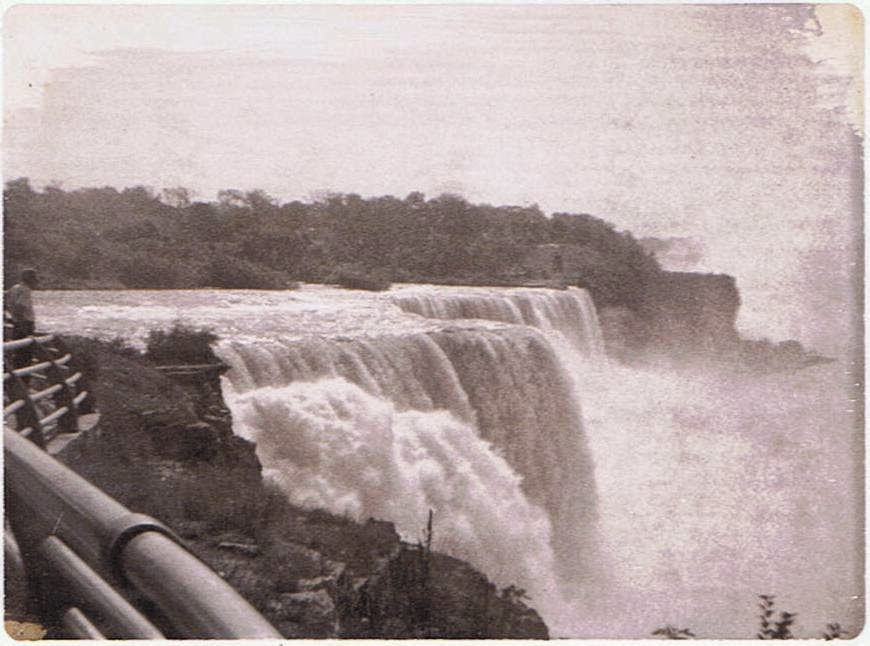
I create mental models (often subconsciously) of who I think I am that contribute to my impression of myself. For example, I see myself as a happy person. At a very young age, I decided a smile should be my “normal” expression. (Of course, there was the time I was making jam, and burnt the bottom out of a 2-quart plastic pitcher full of granulated sugar when I inadvertently turned on the wrong stove burner. No, I was not smiling when eight cups of sugar poured out the burnt bottom like a glittering white Niagara Falls all over the stove and floor, but this is beside the point.)


There was a reason for the smile decision. I had noticed people who, unprovoked, looked as if they had a thorn in their shoe. Others wore a perpetual scowl, while a few looked as if they’d like to bite someone’s head off. (I am not referring to friends or family--just people I'd sometimes meet.) I wanted to see happy faces, and I wanted others to see happiness in me. I knew that when people greeted me with a smile, it set me at ease and lifted my spirits without speaking a word. (I’m not talking about pasted-on TV smiles—insincere and shallow,—but kind and reassuring smiles.) 


So, I try to maintain a cheerful attitude, and a positive outlook. I believe that I'm a cheerful person, most of the time. Or am I? Do I really appear cheerful to others, or am I fooling myself?

One day, many years ago, my brother said to me, "Cynthia, you are such a complainer." I was taken aback….completely shaken. A complainer?! Is that how you see me? I began the arduous and painful task of self-analysis.  I noticed that I did complain from time to time. Indeed, was a complainer! That began a struggle to end the complaining that, unfortunately, continues today. Like a prizefighter, I have bouts of success suppressing individual urges to grumble as they bob and weave in and out of everyday situations.


Every now and then, a family member will act as referee when I go down for the count, and every single time it comes as a surprise! Was I complaining again? How can I repeatedly be so blind to my own behavior? I must conclude that to family members I am (sometimes, at least) seen as a whiny-fuss, which doesn't fit my self-image at all, for I am a cheerful, happy person—truly content.


Another example of this conundrum is the question of introversion versus extroversion.  Surprising to me are friends who are surprised to hear that I am an introvert. The minute I walk into a large gathering, I become a worker bee, busying myself to avoid having to stop and find a place in the hive. If there’s no frantic buzzing to be done, I may find a flower or two whose nectar I already know to be sweet, and comfort myself in their presence. I prefer quiet family gatherings to social calls, I dread and procrastinate making phone calls, and I flee large gatherings in which mingling is expected.


The contradiction: I love being with people. I want to know all about them. I love hearing about their fascinating lives, about what they think, and how they feel. I love to connect with people. However, I prefer being with, knowing about, hearing from, and connecting with people one-on-one. I even prefer to skip the introductory appetizers and salads—the small talk—and cut right into the main dish, where the meaty juiciness and flavor is.

These kinds of incongruities raise disconcerting questions: Is what people see a true representation of what is at my core? And worse: Am I a fake and a fraud?

Fake or Fraud?

Am I a fraud if I profess love for others while preferring the quiet security of being the proverbial fly on the wall, or feeling uncomfortable in the wake of large social events? Am I a fake if my mental model is happiness and good cheer, but sometimes exhibit whiney-fuss tendencies?  
  
I believe I am cheerful, but there are those who perceive me as a complainer. I consider myself an introvert and somewhat clumsy at social interaction, and there are those who see me as extroverted. Examples of these kinds of paradoxes are many and varied. I would venture to guess that if I made an illustration of how I see myself and a group of family and friends collectively made an illustration of how I am seen, the results would be two entirely different pictures!*


"For now we see through a glass, darkly, but then face to face: now I know in part, but then shall I know even as also I am known." (1 Corinthians 13:12) I have pondered this scriptural passage, and have discussed its layers of meaning and application with family members and friends. It appears in the thirteenth chapter of 1 Corinthians at the end of a description of charity—that quality of character, that pure love—that Christ embodied and exemplified, and that is at the pinnacle of His teachings, for without it, He tells us, we are nothing.  

Christ by Karen C. Kindrick Cox

Perhaps I am a fake and a fraud, but I don’t think so. I think it is a matter of perception, which is often flawed. I think there is some kind of middle ground on which I’m standing—the middle ground of Intent and Faith. If I stand there, then I must allow that others stand there, as well, even if I can’t see them with my limited vision.


We are such harsh judges of ourselves. I believe it is best to look for the good in others, and to recognize the good in oneself, to allow for imperfections, and to choose to believe that goodness will prevail. Seeing goodness breeds happiness and contentment. It is not blindness or falsehood. It is a choice about how to see.

Now we see through a glass, darkly.” I cannot now clearly see what I am, or how others perceive me. I cannot clearly see the results of my efforts, or my influence for good or bad. I cannot clearly see my true relationship with others.


But “then, we will see face to face.” “Then,” to me, refers to when I return Home to God who gave me life. Then, shadows of misunderstanding will disperse. I will see without clouded glass, without blurry, dark and tainted perceptions. I will see clearly, distinctly and thoroughly. I will see and understand all the thinking and feelings (my own, and those of others) that have influenced my choices and judgments—both good and bad. All the facades, fears and foibles that have prevented me from understanding the truth as it really is will dissipate. I will see truth in its glory, and will understand and know without falseness that blinds, sharpness that mars, or vague shadows and doubts. Now, I only know tiny particles of all the truth around me because of the limitations imposed by my experiences, biases and environment, by traditions and narrow histories, by physicality and mortality.

But “then, I shall know even as I am also known.” Then, I will understand.

Then, what I am is what you will see, and what I see is what is true in you.


I look forward to that perfect day.


© Copyright July 1, 2014

*After I wrote the first draft of this post, I discovered a wonderful little video (only 3 minutes long) about this very thing. Please click this link to watch the Dove Real Beauty Sketches video.